De meeste Korea-reizen beginnen en eindigen in Seoul. Maar wie de tijd neemt, voegt steeds vaker Busan toe — Korea's tweede stad en de kusttegenhanger van de hoofdstad.
Busan is een makkelijke, indrukwekkende aanvulling op een reis: snel te bereiken vanuit Seoul, met een heel eigen karakter en vol belevenissen die je nog lang bijblijven. Dit is waarom het de moeite waard is, en hoe je het het beste aanpakt.
In het kort
Minder dan 3 uur van Seoul met de KTX · combineer stad, strand en bergen in één bestemming · 2–3 nachten is een prettige duur · goed te combineren met Gyeongju, op ongeveer een uur afstand · beste tijd voor het strand: juni–augustus, voor rustig wandelen: voor- en najaar.
Een andere kant van Korea
Waar Seoul dicht en snel is, is Busan kust en ontspanning — stranden, zeevruchten en bergen die tot aan de zee reiken. Dat contrast binnen één reis geeft je een vollediger beeld van Korea en een welkome tempowisseling die een reis van 10 à 14 dagen levendig houdt. Waar je in Seoul van paleis naar metro naar markt haast, kun je in Busan gewoon een middag op het strand doorbrengen zonder dat het als tijdverlies voelt.
Wat je niet mag missen
Busan heeft een handvol iconische plekken die stuk voor stuk hun reputatie waarmaken.
Gamcheon Culture Village
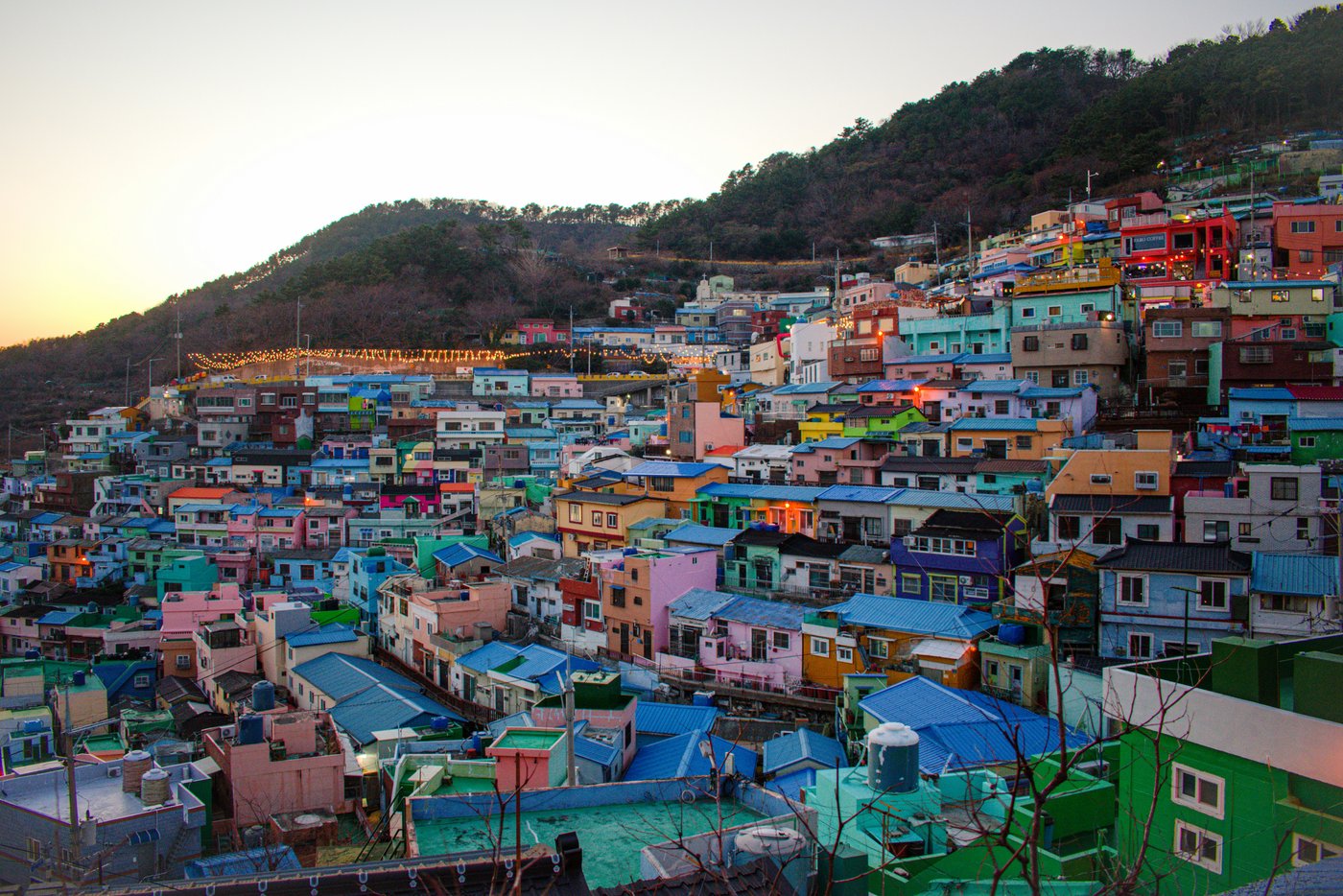
Een heuvelwijk vol kleurrijke huisjes, smalle trapstraatjes en kleine galerietjes en cafeetjes — ooit een eenvoudige woonwijk, nu een van de meest gefotografeerde plekken van Korea. Reken op een paar uur wandelen en verdwalen tussen de steegjes.
Haeundae en Gwangalli
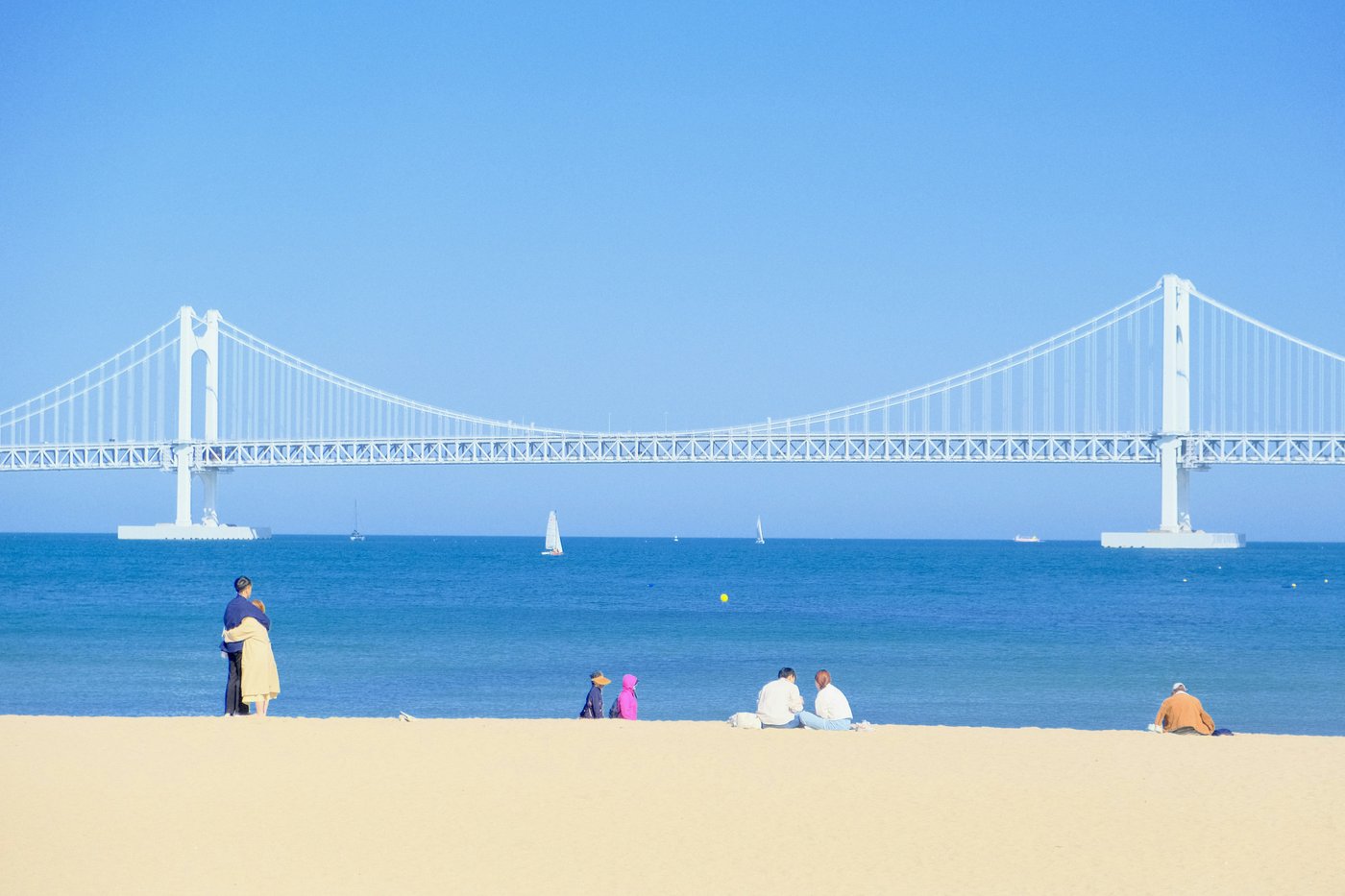
De twee bekendste stranden van Busan, elk met een eigen sfeer: Haeundae is breder en drukker, met een skyline van wolkenkrabbers erachter; Gwangalli is compacter en vooral 's avonds sfeervol, met uitzicht op de verlichte Gwangan-brug.
Jagalchi Vismarkt
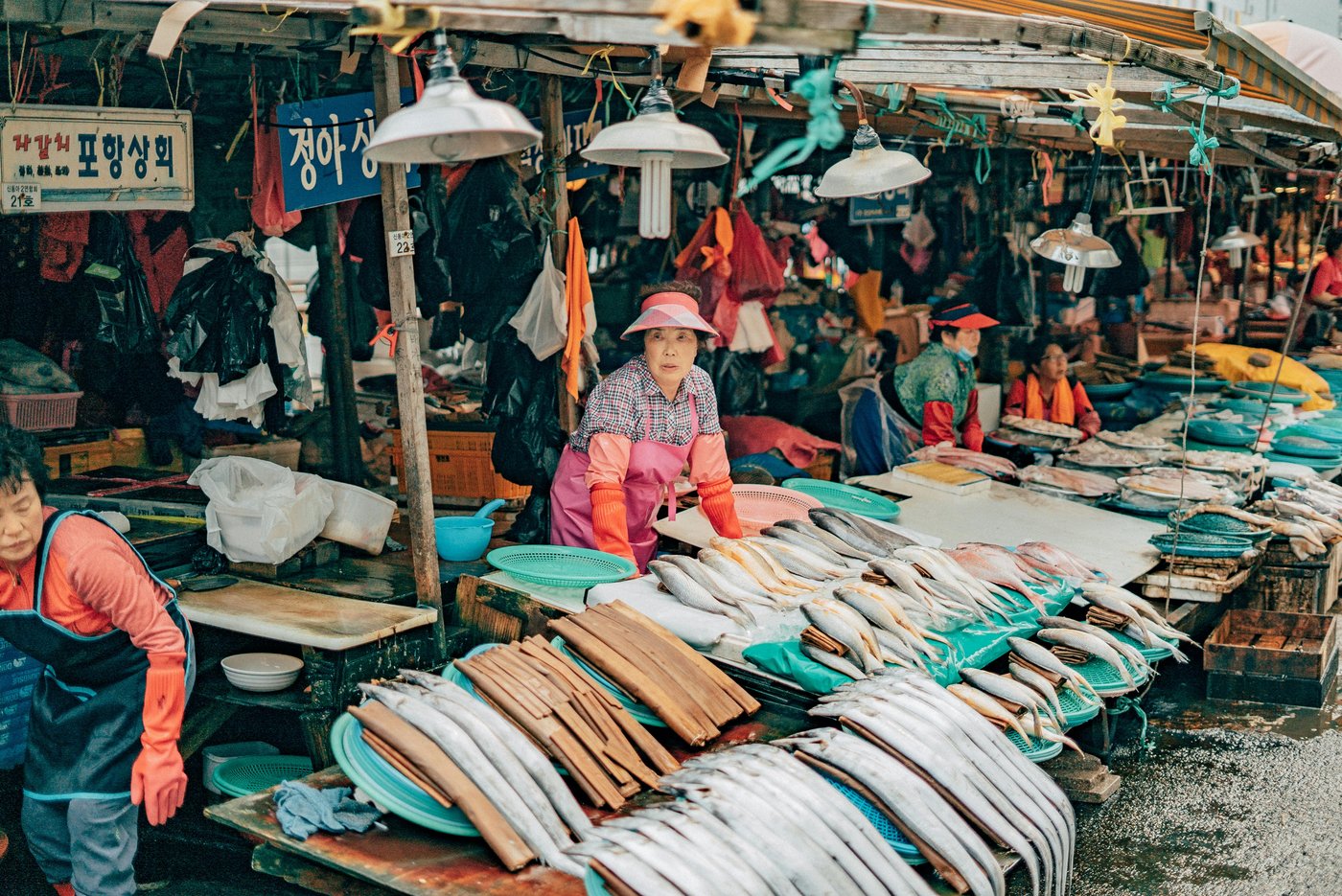
Korea's grootste vismarkt, waar je vers zeevoedsel kunt uitkiezen en ter plekke laten klaarmaken in een van de restaurantjes op de bovenverdieping. Levendig, luidruchtig en een van de beste plekken om de Koreaanse eetcultuur te proeven.
Haedong Yonggungsa
Een zeldzame boeddhistische tempel direct aan de kust, gebouwd tegen de rotsen met de golven eronder — heel anders dan de bergtempels die je verder in Korea tegenkomt.
Eten in Busan
Als kuststad draait de keuken van Busan om zeevruchten — naast Jagalchi Market zijn er ook informele haenyeo-kraampjes met net gedoken zeevruchten. Twee lokale gerechten om te proberen: dwaeji gukbap (varkensvleessoep met rijst, ontstaan in Busan tijdens de Koreaanse Oorlog) en milmyeon (koude tarwenoedels, verfrissend op een warme dag). Beide vind je overal in de stad, van eenvoudige eettentjes tot bekende gevestigde zaken.
Makkelijk te bereiken, makkelijk toe te voegen
Van Seoul naar Busan is het minder dan drie uur met de KTX-hogesnelheidstrein, dus Busan past moeiteloos in een reis zonder lange transfers. De stad heeft ook een eigen internationale luchthaven (Gimhae), wat een open-jaw-route eenvoudig maakt — heen naar Seoul en terug vanuit Busan, of andersom, zodat je niet twee keer dezelfde route aflegt.
Voor wie is Busan ideaal?
Busan werkt voor bijna iedereen — stellen, gezinnen, fijnproevers en reizigers die Seoul al kennen en iets anders zoeken. Het is vooral sterk als je stad en kust wilt combineren, of een rustiger tweede deel van je reis zoekt na de intensiteit van Seoul.
Combineren met Gyeongju
Twee tot drie nachten past natuurlijk voor Busan, en de combinatie met het nabije Gyeongju — de oude Silla-hoofdstad, ongeveer een uur weg — maakt een aantrekkelijke culturele-en-kustlus door het zuiden van Korea. Zo bouw je een route die geschiedenis, stad en kust in één aaneengesloten deel van je reis combineert, zonder heen en weer te hoeven reizen.
Denk je aan Busan voor je Korea-reis? Vertel ons wat je zoekt, dan bouwen we het moeiteloos in je route in. Gratis en vrijblijvend.